
 Maintenance Connection Everywhere (MCe) · EAM/CMMS manuals
We provide two ways to access, delete, insert and edit data.
- REST (RestQL)
- GraphQL
These two, in the Internet, easily result in the vast majority of how data is accessed via APIs. By giving both, we let you work with what is best for you. If you are familiar with REST, don't let the "RestQL" name confuse you, it just is referring to how we are using REST, as a SQL query/editor similar to GraphQL.
If you are familiar with other REST APIs, we think you will very likely be pleased to find out that we did a lot of the leg work for you so that you can focus on your needs and not on figuring out the graphs, that is the relationships.
You can do almost everything in either, but both have advantages and disadvantages. These are spelled out in our Whitepaper exploring the differences between REST and GraphQL.A comparative Analysis of REST and GraphQL for MCe API access - Whitepaper
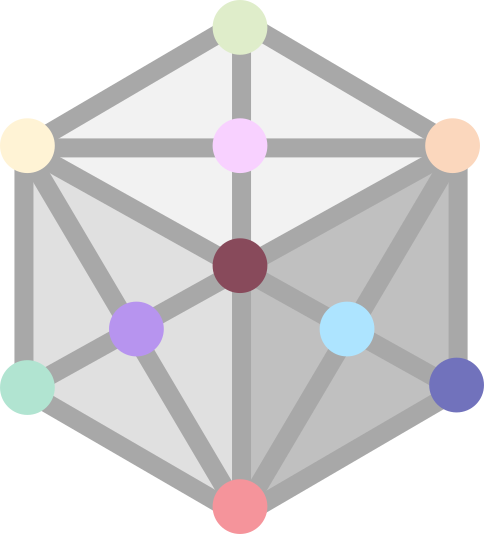
Both our RestQL and GraphQL support and are based on 'relationships' or what in math is known as graphs. (No, not the pretty colored things with bars and lines) for a quick introduction to Graph theory, see our whitepaper the explores the concepts of Graph as they pertain to GraphQL and to a large degree to RestQL:
One realistic factor is - what do you already know?
We provide full documentation for the 1000's of calls we provide, so that should not affect your decision.
What do we recommend?
If you don't know REST or GraphQL, you will most likely find GraphQL the easier to use for anything beyond the simple cases. It certainly has more flexibility. But on the other hand, we have had customers who already had REST working, and felt it was easier to 'get started' with REST, then, when they need more complicated calls, learn and use GraphQL at that time. But on the other other hand (yes the 3rd hand) … if you are going to eventually go to GraphQL, we think you will be better served by learning GraphQL with your simple needs, giving you a stepping stone to more complex actions later.